29 April, 2011

Idea for collecting Rainwater in Sana'a wins Award

San'a is known for its persistent, and now becoming chronic, water shortage. Experts say that Sana'a will be one of the first cities in the world, if not the first, to run out of water. With its population growing fast, finding sustainable water resources for the people of this city is not an option, but a must. How about finding a way for collecting rain water on the city's flat roof-tops, filtering it and storing the water there? That is what Canadian born and presently Sana'a city resident Sabrina Faber's idea is. Her idea has just received a huge boost from the Dutch electronics company Philips: of about 450 entries from 29 countries around the world,  it won the first price.

28 April, 2011

Out of the Hadhramaut are most Hadharem

For the last few weeks I have been posting here on the many mosques that are in Eastern Africa; I had no idea at all that it would arouse interest and find readers. Well, so far, many have been reading these posts; most of whom, I believe have never visited this blog before. For years now, especially when traveling, I have realized that very few people know of the extent of the Hadhrami influence in Eastern Africa; from the Sudan through Eritrea, Djibouti, Ethiopia, Somalia through to Kenya, Uganda, Rwanda, Tanzania, Mozambique and the many Indian Ocean islands and archipelagos. Very few people know that the Hadharem and people of Hadrami descent, are in all all of the Eastern African, Indian Ocean the South Asian and the South-East Asian countries. In some of these countries they are prominent and influential.

26 April, 2011

Masjid: Mosques of Eastern Africa V

Zanzibar, a semi autonomous part of the United Republic of Tanzania, is almost one-hundred-percent Muslim. The archipelago is a series of many low lying, scenic islands, with Unguja and Pemba being the main ones. For tens of thousands of years, Zanzibar has been occupied by humans. The first Muslims to have landed on it are said to have been Persian traders; they and Arabs had been visiting and passing through Zanzibar even before Islam. From 1698 until 1963, Zanzibar was ruled by Omanis. Very sadly, here too, apart from ivory and spices, like in most of the coast of East Africa during that time, one of the most traded 'merchandise', were humans; for long, Zanzibar city was the main slave-trading port in East Africa. It is the Persians and the Omanis who converted most of Zanzibar's indigenous people to Islam; Indians too, have played a major role in shaping Islam on the islands. The population of nearby islands of the Comoros in the south is also almost wholly Muslim; while in the north, the Seychelles which was known and visited by Arabs much earlier than the Europeans, has very few Muslims: reportedly less than 2% of the population. On all these islands are many mosques:

24 April, 2011

Masjid: Mosques of Eastern Africa IV

How many Muslims are in Mozambique? Of all Eastern African countries, it is harder to get reliable, proper figures on the number of Muslims in this very fertile, green country. There are many Muslims in Mozambique; their number can be any where between 20% to 40% of the population. Whatever the number is, today, Islam is growing rapidly in the country; especially in the north, along the coast and in the urban areas. Mainly through trade, which very sadly included that of salves, this very well endowed land has a very long history with Islam; no one knows exactly when Islam entered Mozambique; most probably in the 7th Century when Arabs, who referred to Mozambique as Bilad As Sufalaa and later as Musanbi'h, started trading with Eastern Africa and to as far as Madagascar; by the 13th Century there were many Arab dominated city-states including the one at Sofala.  Mozambique has had a very painful past with the struggle for independence; it is still struggling to build its infrastructure and a working democracy. In this very delightful country, there are many mosques; old and new:

19 April, 2011

Green: the Ilmu Giri Pesantren

In Imogiri, Central Java, Indonesia - is the Ilmu Giri Pesantren, an Islamic boarding school that six years ago began offering a new kind of curriculum to a handful of local farmers. Founded by Nasruddin Anshory - students of Islam, young and old and from all over the country, are now flocking to this tiny, mostly outdoor campus to hear him preach on environment and conservation. As a Muslim,” Nasruddin syas, “you have to do something.” And that something is: environmental awareness and action.

12 April, 2011

Masjid: Mosques of Eastern Africa III

Kilwa
In Eastern Africa, Tanzania has the largest Muslim population. The semi-autonomous island of Zanzibar, which is a part of Tanzania, is almost wholly Muslim, while the mainland is about 50% Muslim. Hadharem, Omanis and Persians have all played a huge role in the spreading of Islam here. Islam has played an influential role in shaping the culture of most Tanzanians, even that of non-Muslims. Swahili, the national and official language of the country, is very much influenced and shaped by Islam. I do not know of any other country where Muslims live as peacefully with people of other faiths as in Tanzania. I do not know too, of any other country where the leadership of its country, peacefully and democratically changes from a Muslim to a Christian and vice-versa, as in Tanzania. Its current head of state, several of its cabinet minsters and many of its leaders are Muslims. Islam means mosques. The earliest concrete evidence of Muslim presence in East Africa is the foundation of a mosque in Shanga on Pate Island, Tanzania. The mosque dates 830 AD. And there are many other mosques in Tanzania: like in Kenya, some very old and some new. Some Mosques in Tanzania:

11 April, 2011

Of Blogging

Around the world, every day, millions of people blog. Blog on numerous subjects. Most of these blogs are rarely read or visited; but, people still blog. Most bloggers write about themselves or what they do or are doing. Very few blogs are interesting or objective.  Many blog to release their inner feelings or frustrations. With many Middle East countries now witnessing incredible transformations, many use blogging to do just that: release those inner feelings and frustrations; and that, at times, can be risky and dangerous. Most people blog just for fun. Blogging is a form of communication. How one communicates in his/her blog would determine who visits the blog and how many do so. There are several blogging platforms; most of which are hard to use or unreliable or are complicated.

09 April, 2011

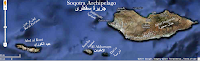
Map of Socotra

Click on map to enlarge
It is hard to find a good, correct map of the remote archipelago: Soqotra. I decided, with the help of Google Maps, to make one. I have also given what I believe are the correct spellings of the main different parts of the Island.

08 April, 2011

Masjid: Mosques of Eastern Africa II

Uganda, which has about 36% or so Muslims, is one of three Eastern African counties which is a member of the Organisation of Islamic Conference. Uganda too, has the largest and most advanced Islamic university in Eastern Africa. And unlike the other countries, Islam came to Uganda in the mid 19th Century from Sudan in the north and also from the east through the coast and inland networks of the East African coastal trade. As for the other Eastern African countries: in Malawi, Muslims make up about 36% of the population; in Zambia, it is hard to get a good estimate of the number of Muslims there, but estimates put them at about 10% ; same goes for Zimbabwe, where it is estimated that about 10% of its population are Muslims; in Burundi, Muslims make up about 10% of its population. And Rwanda, where about 15% of the population are Muslims - here is a country that has seen so much suffering and misery in the last few years, and yet it is recovering so well; it is a country too, that is so welcoming to Islam, that, in the last 15 years, more Rwandans per-capita have converted to it than in any other Eastern African country; this fast rise in the population of Muslims is the result of what happened during the Rwandan Genocide of 1994 when in less than three months, hundreds of thousands of mainly Tutsis, were slaughtered in the most brutal and horrific of ways. In all these Eastern African countries, there are many mosques. Some Mosques in Uganda, Rwanda, Burundi, Zambia, Malawi and Zimbabwe:

03 April, 2011

Masjid: Mosques of Eastern Africa I

Lamu
When the great Moroccan traveler and adventurer, Abu Abdullah Muhammad Ibn Battuta, arrived on the East African coast in 1331, he found many Muslims already settled here. It is believed that the first Muslims arrived in East Africa about 1,200 years ago; and through Arab merchants and preachers, Islam established itself as the main religion on the East African coast. With time, it spread in to the interior. Although Omani Arabs controlled the coast and the nearby islands politically, it was mainly the Hadharem who preached and spread Islam extensively here. Today, there are millions of Muslims in East Africa, mainly along the coast and in the north. In Kenya, Muslims number about about 20% of the country's population. In almost every part of Kenya, there are mosques. Some very old; and some new. Some Mosques of Kenya:
The Web Search Out Of Hadhramout

Blogger Template by: Ourblogtemplates.com 2008 | RSS S Feed | Copyright © Out Of Hadhramout | 2006-2011